What Is TOPCon Solar Cell Technology?
Understanding N-Type Tunnel Oxide Passivated Contact Solar Cells, Their Structure, Working Principle and Performance Characteristics
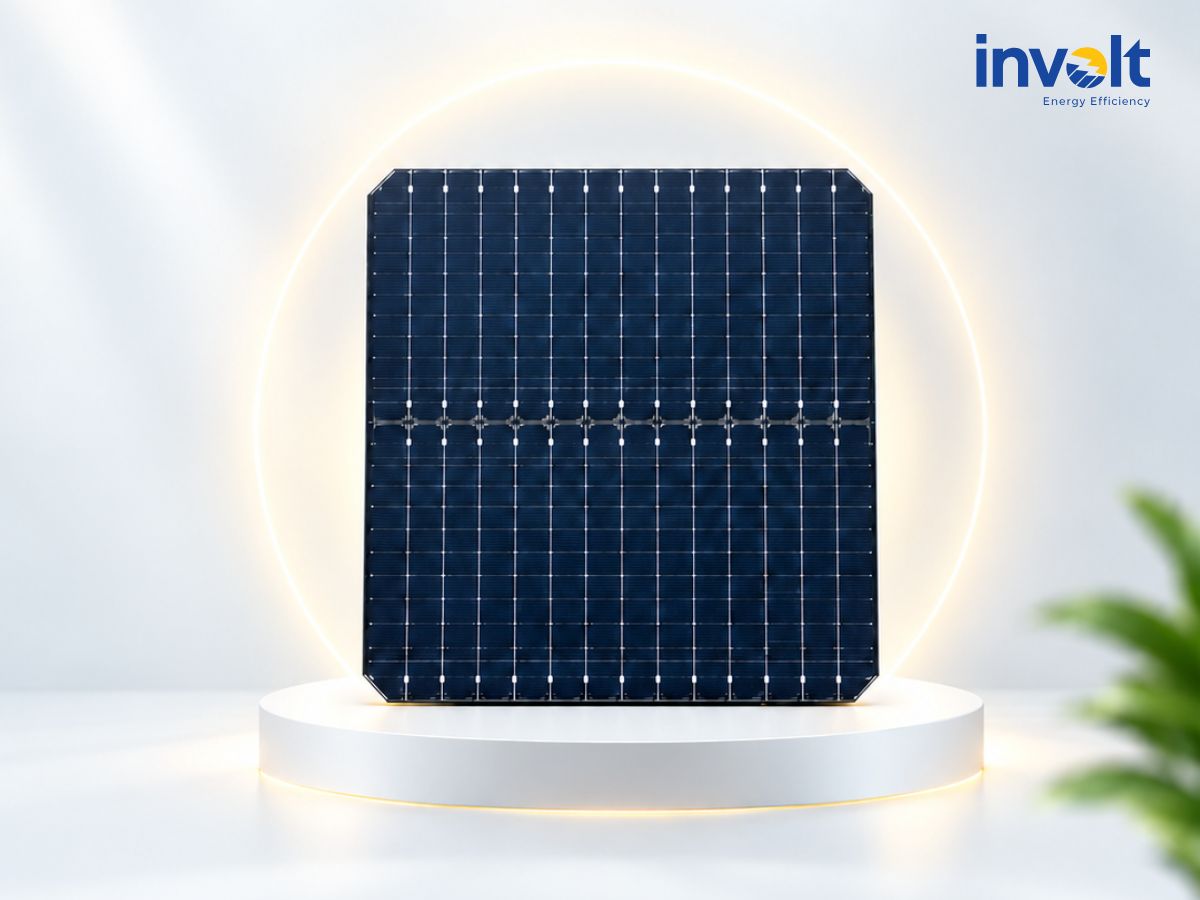
TOPCon stands for Tunnel Oxide Passivated Contact. It is a crystalline silicon solar cell architecture that uses a thin tunnel oxide layer and a passivated contact structure to reduce charge-carrier recombination. By reducing these electrical losses, TOPCon technology can support high-efficiency solar cell performance.
TOPCon Solar Cell Technology at a Glance
What Does TOPCon Mean in Solar Cells?
TOPCon is short for Tunnel Oxide Passivated Contact. The term describes a passivated-contact architecture used in crystalline silicon photovoltaic cells.
A TOPCon structure incorporates an extremely thin tunnel oxide layer together with a doped polysilicon contact. This structure is designed to allow useful charge carriers to be collected while limiting recombination at the contact interface.
Recombination is important because charge carriers that recombine before being collected cannot contribute to useful electrical output. Reducing these losses is therefore one route toward improving solar cell efficiency.
How Does a TOPCon Solar Cell Work?
Like other crystalline silicon photovoltaic cells, a TOPCon solar cell converts sunlight into electrical energy through the photovoltaic effect. What distinguishes TOPCon is the passivated-contact architecture used to reduce electrical losses at important interfaces within the cell.
Sunlight Is Absorbed
Photons from sunlight are absorbed by the semiconductor material, generating electron-hole pairs inside the solar cell.
Charge Carriers Are Separated
The cell’s internal electric field helps separate generated charge carriers and directs them toward the appropriate regions of the device.
Passivated Contacts Reduce Losses
The tunnel oxide and passivated-contact structure help limit recombination, allowing more useful charge carriers to reach the electrical contacts.
See How TOPCon Solar Cells Are Manufactured
Now that you understand how TOPCon technology works, explore how these principles move into production—from wafer texturing and passivation through metallization, testing, sorting and automatic packing.
What Is the Structure of a TOPCon Solar Cell?
TOPCon solar cells combine crystalline silicon semiconductor layers with a specialized passivated-contact structure. Exact designs and production processes can vary, but the thin tunnel oxide and doped polysilicon contact are defining features of TOPCon technology.
| Cell Component | Function |
|---|---|
| Silicon Wafer | Forms the primary semiconductor base of the photovoltaic cell. |
| Emitter | Helps establish the junction required for charge separation. |
| Tunnel Oxide Layer | Provides a very thin passivation layer at the contact interface. |
| Doped Polysilicon Layer | Forms part of the passivated-contact structure used for selective carrier transport. |
| Metal Contacts | Collect and conduct electrical current generated by the solar cell. |
Why Is N-Type Silicon Used in TOPCon Solar Cells?
Many commercial TOPCon solar cells use N-Type crystalline silicon wafers. N-Type silicon is doped so that electrons are the majority charge carriers.
N-Type silicon is well suited to high-efficiency photovoltaic cell architectures and avoids the conventional boron-oxygen light-induced degradation mechanism associated with many boron-doped P-Type wafers.
However, cell performance depends on much more than wafer type. Wafer quality, surface passivation, contact design, metallization, process control and manufacturing consistency all influence the finished solar cell.
N-Type and TOPCon Are Not the Same Thing
N-Type describes characteristics of the silicon substrate, while TOPCon describes a passivated-contact solar cell architecture.
The terms are closely related in modern cell manufacturing, but they describe different aspects of the photovoltaic cell.
Key Performance Characteristics of N-Type TOPCon Solar Cells
Buyers and engineers evaluating TOPCon solar cells should consider multiple performance parameters rather than relying on a single headline specification.
Cell Efficiency
Passivated-contact technology is designed to reduce recombination losses and support high photovoltaic conversion efficiency.
Bifacial Performance
Bifacial TOPCon cells can respond to light reaching both front and rear surfaces when incorporated into an appropriately designed photovoltaic module.
Temperature Coefficient
Temperature coefficient indicates how an electrical performance parameter changes as operating temperature increases.
Low-Light Performance
Performance under reduced irradiance is another useful consideration when evaluating photovoltaic cell technologies.
Degradation Characteristics
N-Type architectures can have different degradation characteristics compared with conventional P-Type technologies.
Passivated Contacts
Contact passivation is central to TOPCon technology and is designed to limit carrier recombination at electrical contact interfaces.
How Is N-Type TOPCon Different From Conventional P-Type Solar Cells?
N-Type TOPCon and conventional P-Type cells differ in both semiconductor characteristics and cell architecture. The exact performance difference depends on the specific cells being compared.
| Parameter | N-Type TOPCon | Conventional P-Type |
|---|---|---|
| Typical Wafer Type | N-Type silicon | P-Type silicon |
| Contact Architecture | Tunnel oxide passivated contact | Depends on the specific cell architecture |
| Passivated Contact | A defining feature of TOPCon architecture | Not a defining feature of all conventional P-Type architectures |
| LID Behaviour | Avoids the conventional boron-oxygen LID mechanism associated with many boron-doped P-Type wafers | Depends on wafer chemistry and cell technology |
| Bifacial Capability | Common in modern TOPCon cell designs | Depends on the cell design |
How Does Involt Energy Manufacture N-Type TOPCon Solar Cells?
Involt Energy manufactures high-efficiency N-Type TOPCon solar cells using intelligent, automated production systems designed for precision, consistency and traceability.
From raw wafer handling through final solar cell output, Involt’s production environment combines automated workflows, smart material movement, real-time manufacturing monitoring and automated quality inspection.
This manufacturing infrastructure supports the controlled and repeatable production required for advanced N-Type TOPCon solar cell technology.
Explore Involt Energy’s intelligent solar cell manufacturing capabilities to learn more about its production systems.
N-Type TOPCon solar cell production process at Involt Energy.
Intelligent Manufacturing Systems at Involt Energy
Involt’s solar cell manufacturing environment integrates automation, intelligent material flow, manufacturing execution technology and automated quality inspection across production.
Fully Automatic Production Line
Involt uses end-to-end automation from raw wafer handling through final solar cell output. Precision-engineered workflows minimize manual intervention and support production consistency.
AGV-Based Material Movement
Automated Guided Vehicles (AGVs) support uninterrupted and synchronized material movement. Adaptive routing enables real-time task allocation while reducing manual handling.
MES-Driven Shop Floor Intelligence
Involt uses a Manufacturing Execution System (MES) for real-time production monitoring and traceability. Digital-twin integration supports machine utilization, predictive maintenance and defect tracking.
Automated Packing & QC Intelligence
Automated packing is supported by quality-control and barcode-traceability systems. Statistical Process Control (SPC) checks and Automated Optical Inspection (AOI) camera monitoring support real-time defect detection and quality validation.
N-Type TOPCon Solar Cell Manufacturing at Involt Energy
Involt Energy Pvt. Ltd. is dedicated to the research, development and manufacturing of high-efficiency N-Type TOPCon solar cells.
The company’s manufacturing facility is located at Mitana, Rajkot, Gujarat, India, where intelligent production systems are used for N-Type TOPCon solar cell manufacturing.
If you are researching Involt’s manufacturing capabilities, cell performance and company-specific information, visit our detailed N-Type TOPCon Solar Cell Manufacturer in India page.
What Should Buyers Evaluate When Comparing TOPCon Solar Cells?
Module manufacturers and procurement teams should evaluate the complete technical and manufacturing profile of a cell rather than focusing only on a single efficiency number.
Electrical Performance
Review cell efficiency, power output and other electrical parameters under the stated test conditions.
Bifaciality
Evaluate rear-side response where bifacial cell performance is relevant to the intended module architecture.
Temperature Coefficient
Compare how the applicable electrical performance parameter changes as cell temperature increases.
Degradation Behaviour
Review relevant LID, PID and reliability-related characteristics using manufacturer documentation.
Cell Compatibility
Confirm dimensions, electrical characteristics and processing compatibility with the intended module design.
Manufacturing & Quality Control
Consider production consistency, testing, traceability and technical documentation alongside headline performance values.
Where Does ALMM List-II Fit When Evaluating TOPCon Solar Cells?
Understanding TOPCon technology helps buyers evaluate the technical characteristics of a solar cell. For procurement requirements where ALMM provisions are relevant, module manufacturers and B2B buyers should also check the latest official ALMM List-II for solar PV cells.
Technology Evaluation and ALMM Verification Serve Different Purposes
TOPCon architecture, electrical specifications, manufacturing quality and module compatibility form part of the technical evaluation. ALMM verification is a separate procurement and regulatory check that should use the latest official MNRE List-II and applicable requirements.
Buyers should verify the relevant manufacturer, manufacturing facility, solar cell model and validity rather than relying only on a technology name or an older list.
Moving From TOPCon Technology Research to Supplier Evaluation?
Understanding TOPCon technology is the first step. Procurement teams should also evaluate solar cell specifications, manufacturing capability, quality control, testing, traceability and technical documentation when comparing TOPCon solar cell manufacturers.
How Does TOPCon Compare With PERC Solar Cells?
Now that you understand how TOPCon technology works, compare it with PERC solar cells across cell architecture, substrate type, degradation considerations, bifaciality, temperature behaviour and manufacturing.
Frequently Asked Questions About TOPCon Solar Cell Technology
What is a TOPCon solar cell?
A TOPCon solar cell is a crystalline silicon photovoltaic cell that uses Tunnel Oxide Passivated Contact technology. Its passivated-contact structure is designed to reduce charge-carrier recombination and support high cell performance.
What does TOPCon stand for in solar cells?
TOPCon stands for Tunnel Oxide Passivated Contact. The name refers to the thin tunnel oxide and passivated-contact structure used in the solar cell architecture.
Is TOPCon an N-Type solar cell technology?
Commercial TOPCon solar cells commonly use N-Type crystalline silicon wafers. N-Type describes the silicon substrate, while TOPCon describes the passivated-contact architecture.
How does TOPCon technology improve solar cell performance?
TOPCon technology uses a passivated-contact structure designed to reduce charge-carrier recombination at contact interfaces. Reducing these electrical losses can support higher photovoltaic conversion efficiency.
What is the difference between TOPCon and PERC solar cells?
TOPCon and PERC use different solar cell architectures. TOPCon incorporates a tunnel oxide passivated contact, while PERC uses rear-side passivation with localized contacts. Actual performance should be compared using specific cell data and test conditions rather than technology names alone.
Are TOPCon solar cells bifacial?
Many modern TOPCon solar cells are designed for bifacial operation. This allows light reaching the rear surface to contribute to electrical generation when the cell is incorporated into an appropriately designed bifacial module.
Why is N-Type silicon used in TOPCon solar cells?
N-Type silicon is suited to high-efficiency photovoltaic architectures and avoids the conventional boron-oxygen light-induced degradation mechanism associated with many boron-doped P-Type wafers.
Does Involt Energy manufacture N-Type TOPCon solar cells?
Yes. Involt Energy manufactures N-Type TOPCon solar cells at its manufacturing facility in Gujarat, India. Buyers should refer to the latest approved Involt product documentation for current product specifications.
How does Involt Energy control its solar cell manufacturing process?
Involt Energy’s manufacturing environment includes fully automatic production lines, AGV-based material movement, MES-driven production monitoring, barcode traceability, Statistical Process Control and Automated Optical Inspection systems.
Continue Exploring N-Type TOPCon Solar Cells
Explore related Involt resources to understand the technology, manufacturing environment and commercial capabilities behind N-Type TOPCon solar cells.
N-Type TOPCon Solar Cell Manufacturer in India
Explore Involt Energy’s N-Type TOPCon solar cell manufacturing capabilities, technology and performance information.
Explore Involt TOPCon Solar Cells →Intelligent Solar Cell Manufacturing
Discover Involt Energy’s automated production lines, AGV material movement, MES intelligence and automated quality-control systems.
Explore Intelligent Manufacturing →Involt Energy Solar Cell Products
Explore product information from Involt Energy for its N-Type TOPCon solar cell portfolio.
View Solar Cell Products →About Involt Energy
Involt Energy Pvt. Ltd. is dedicated to the research, development and manufacturing of high-efficiency N-Type TOPCon solar cells.
The company’s solar cell manufacturing facility is located at Mitana–Wankaner Road, Mitana, Rajkot, Gujarat, India.
Learn more about Involt Energy , explore its solar cell products , or contact Involt Energy for business and product enquiries.
How Is TOPCon Performance Represented in a Solar Cell Datasheet?
Understanding the technology is the first step. The next is learning how efficiency, power, voltage, current, cell dimensions and other parameters are represented when evaluating TOPCon solar cells.
Explore TOPCon Solar Cell Specifications →Looking for N-Type TOPCon Solar Cells?
Connect with Involt Energy to discuss N-Type TOPCon solar cell requirements, product information and B2B procurement enquiries.
Contact Involt Energy