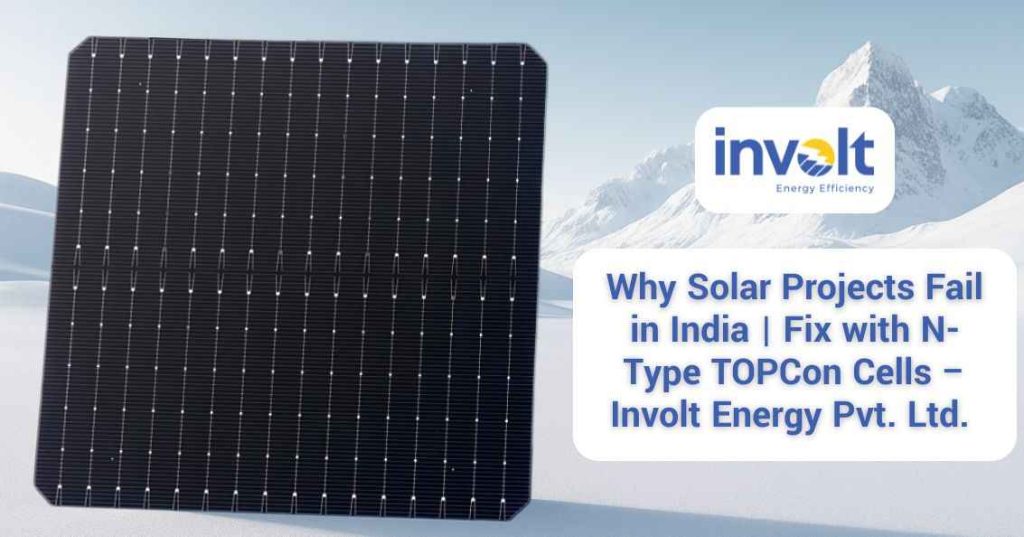
Why Solar Projects Fail in India | Fix with N-Type TOPCon Cells
Introduction: The Real Reason Behind Solar Project Failures in India
India is witnessing massive growth in solar energy. Businesses, industries, and developers are investing heavily in solar power projects. However, despite this rapid expansion, many projects struggle with low output, poor efficiency, and declining returns.
This raises a critical question:
Why do solar projects fail in India even after high investment?
The answer lies in multiple factors. Yet, the most overlooked issue remains poor quality solar cells.
Today, many developers face:
- Solar plant underperformance causes
- Solar panel low output in India
- Solar system problems affecting ROI
- Solar energy production issues in harsh climates
These challenges directly impact project success. Moreover, they reduce long-term profitability.
⚡ Quick Answer
Most solar projects in India fail due to low-quality solar cells, poor system design, and wrong supplier selection. These factors lead to low efficiency, faster degradation, and reduced energy output over time.
📉 The Growing Concern: Solar Plant Underperformance in India
Solar projects should deliver consistent performance for 25+ years. However, many systems start losing efficiency within just a few years.
This happens because:
- Developers often prioritize low cost over quality
- Substandard solar cells enter the supply chain
- EPC decisions focus on short-term savings
As a result, projects face:
- Solar module efficiency loss
- Solar plant degradation issues
- Lower energy yield
- Reduced performance ratio
🔍 Why This Topic Matters for Solar Buyers & EPC Companies
If you are:
- A solar EPC company
- A project developer
- An industrial investor
Then understanding solar project failure reasons in India becomes essential.
Because:
👉 The right solar cell technology determines performance
👉 The right supplier ensures long-term reliability
👉 The wrong choice leads to massive financial losses
💡 The Core Problem: Poor Quality Solar Cells
Not all solar cells perform the same.
Low-quality solar cells often lead to:
- Higher degradation rates
- Poor performance in Indian heat
- Increased energy loss
- Lower durability
On the other hand, high-efficiency solar cells deliver:
- Better output
- Longer lifespan
- Higher ROI
This is where advanced technologies like N-Type TOPCon solar cells play a critical role.
🚀 What You Will Learn in This Blog
In this detailed guide, you will understand:
- The real solar project failure reasons in India
- How poor quality solar cells impact performance
- Key technical factors behind solar plant underperformance
- Comparison of solar technologies like PERC vs TOPCon
- How to choose the best solar cell supplier in India
- Proven ways to avoid solar project failures
🎯 Expert Insight
Most solar failures do not happen due to external conditions. They happen due to wrong technology and poor component selection at the start.
If you’re planning a solar project or facing performance issues, this guide will help you make the right decision.
📊 Industry Insight
India is rapidly scaling solar capacity, but a significant number of projects face solar plant underperformance and efficiency loss within the first few years.
Studies and industry observations show:
- Solar plants can lose 15–25% efficiency due to poor quality solar cells
- High temperatures in India can reduce output by 10–20% in low-grade cells
- Average degradation in inferior cells can exceed 2–3% annually
What Causes Solar Projects to Fail in India?
Solar energy projects promise long-term returns. However, many projects in India fail to deliver expected performance. The gap between expected output and actual generation keeps increasing.
So, what causes solar projects to fail in India?
The answer includes multiple technical and execution-related factors. Yet, most failures connect directly to poor quality components, weak planning, and wrong decisions at the start.
⚡ Quick Snippet
Top 5 reasons why solar projects fail in India: poor quality solar cells, installation mistakes, EPC challenges, execution delays, and improper plant design.
🟠 2.1 Poor Quality Solar Cells Impact
This remains the biggest reason behind solar plant underperformance.
Low-quality solar cells create serious long-term issues:
- Low energy generation from day one
- Faster solar panel degradation
- High temperature losses in Indian climate
- Reduced solar module efficiency
- Increased risk of cell defects and microcracks
As a result:
👉 Solar plants show low output
👉 ROI drops significantly
👉 System lifespan reduces
Many developers ignore this at the procurement stage. However, this single mistake leads to major solar project losses.
🟠 2.2 Solar Installation Mistakes in India
Even high-quality components fail with poor installation.
Common solar installation mistakes in India include:
- Wrong tilt angle and orientation
- Improper wiring and loose connections
- Shading issues not addressed
- Poor mounting structure alignment
- Lack of proper earthing
These errors lead to:
- Solar system not generating enough power
- Frequent maintenance issues
- Safety risks
- Lower plant efficiency
🟠 2.3 Solar EPC Challenges in India
EPC companies play a crucial role. However, many projects suffer due to poor EPC execution.
Key solar EPC challenges in India:
- Focus on cost-cutting instead of quality
- Use of substandard solar cells and modules
- Weak project planning
- Poor vendor selection
- Lack of technical expertise
Because of this:
👉 Solar plant performance issues increase
👉 Energy yield drops
👉 Long-term reliability gets compromised
🟠 2.4 Solar Project Execution Issues in India
Execution speed often becomes a problem.
Common solar project execution issues:
- Project delays due to poor coordination
- Incomplete system testing
- Lack of quality checks
- Improper commissioning practices
These issues create:
- Early-stage performance failures
- Unexpected downtime
- Increased operational costs
🟠 2.5 Solar Plant Design Mistakes
Design plays a critical role in solar success.
However, many projects suffer from:
- Incorrect system sizing
- Poor inverter selection
- Weak layout planning
- Ignoring local climate conditions
- No optimization for heat and dust
These mistakes result in:
- Solar plant low efficiency
- Energy losses over time
- Poor solar energy production
- Reduced plant performance ratio
📉 Key Takeaways (Ranking Booster Section)
- Poor quality solar cells create maximum damage
- Installation errors reduce system output
- Weak EPC decisions impact long-term performance
- Execution delays cause early failures
- Design mistakes limit energy generation
In many Indian solar projects, developers have reported significant output drops within 2–3 years due to poor-quality solar cells and improper procurement decisions.
💡 Expert Insight
Most solar projects do not fail suddenly. They fail slowly due to compounding mistakes in quality, design, and execution.
👉 This clearly shows one thing:
The foundation of every successful solar project starts with the right solar cell technology and the right supplier.
How Poor Quality Solar Cells Affect Performance
Solar projects depend on one core component: solar cells.
If the cell quality drops, the entire system suffers.
Many developers ignore this fact. They focus on module pricing instead of cell performance. As a result, projects face serious solar plant performance issues from the beginning.
So, how exactly do poor quality solar cells affect performance?
⚡ Quick Snippet
Impact of low-quality solar cells on ROI: They reduce energy output, increase degradation, cause efficiency loss, and lower long-term returns in solar projects.
🟠 3.1 Solar Panel Low Output in India
Low output remains the most visible problem.
In India, high temperatures and dust already challenge performance. When low-quality cells get used, the situation worsens.
Common reasons for solar panel low output in India:
- Low cell conversion efficiency
- Poor current generation capability
- High internal resistance in cells
- Weak performance under high irradiance
Because of this:
👉 Solar systems do not generate expected power
👉 Developers face solar energy production issues
👉 Investors see reduced returns
🟠 3.2 Solar Module Efficiency Loss
Efficiency defines how much sunlight converts into electricity.
Poor quality cells reduce module efficiency from the start.
Major causes of solar module efficiency loss:
- Low-grade silicon wafers
- Inconsistent cell manufacturing
- Poor metallization and contacts
- Higher recombination losses
Over time:
- Efficiency keeps dropping
- Output declines faster than expected
- System performance becomes unstable
This leads to solar plant low efficiency reasons becoming a serious concern.
🟠 3.3 Solar Panel Degradation Causes
All solar panels degrade. However, low-quality cells degrade much faster.
Key solar panel degradation causes:
- Light Induced Degradation (LID)
- Potential Induced Degradation (PID)
- Microcracks in cells
- Poor encapsulation quality
When solar cell defects in India increase, degradation accelerates.
As a result:
👉 Solar plant degradation rate increases
👉 Output drops every year
👉 System lifespan reduces
🟠 3.4 Solar Plant Heat Loss in India
India’s climate creates extreme heat conditions. High temperature directly affects solar performance.
Poor quality solar cells struggle under heat.
Major solar plant heat loss issues:
- High temperature coefficient
- Increased resistive losses
- Reduced voltage output
- Thermal stress on cells
Because of this:
👉 Solar panel performance in Indian climate drops
👉 Energy yield decreases significantly
👉 Projects fail to meet generation targets
🟠 3.5 Solar Energy Production Issues
When multiple issues combine, energy production suffers.
Common solar energy production issues caused by poor cells:
- Inconsistent power generation
- Frequent output fluctuations
- Low performance ratio
- Reduced capacity utilization
Additionally, solar module failure reasons include:
- Weak soldering joints
- Cell mismatch losses
- Delamination issues
- Moisture ingress
All these factors reduce reliability.
📉 Key Takeaways
- Poor quality solar cells reduce output from day one
- Efficiency loss increases over time
- Degradation happens faster
- Heat losses become severe in India
- Energy production becomes unstable
💡 Expert Insight
Solar modules may look identical from outside. However, the real difference lies inside the cell. High-quality cells ensure stable performance, while poor cells silently destroy project returns.
👉 This clearly proves:
The quality of solar cells directly controls solar project success, efficiency, and ROI.
Poor quality solar cells not only reduce performance but also directly impact financial returns.
👉 Even a 10% drop in efficiency can result in lakhs of rupees in long-term revenue loss for large-scale solar projects.
Solar Plant Underperformance: Key Technical Reasons
Solar plant underperformance does not happen randomly. It happens due to measurable technical factors. Most developers overlook these parameters during planning and procurement.
If you want to understand solar plant underperformance causes, you must analyze key performance metrics. These metrics decide whether your project delivers expected output or fails over time.
🟠 4.1 Solar Cell Temperature Coefficient in India
Temperature plays a critical role in solar performance. India faces high ambient temperatures for most of the year.
The solar cell temperature coefficient defines how much efficiency drops when temperature rises.
In simple terms:
👉 Higher temperature = Lower output
Poor quality cells show:
- Higher temperature coefficient
- Faster voltage drop
- Reduced energy generation
This leads to:
- Solar panel performance issues in Indian climate
- Increased solar plant heat loss
- Lower annual energy yield
High-efficiency technologies like N-Type cells perform better because they handle heat more effectively.
🟠 4.2 Solar Plant Degradation Rate in India
All solar systems degrade over time. However, the rate of degradation determines long-term performance.
🔍 What is solar degradation rate?
Solar degradation rate refers to the annual reduction in solar panel output efficiency.
In India:
- High-quality systems degrade slowly
- Poor quality systems degrade faster
Typical issues with high degradation:
- Faster drop in energy output
- Reduced system lifespan
- Lower return on investment
Low-quality solar cells increase:
- LID (Light Induced Degradation)
- PID (Potential Induced Degradation)
As a result, solar plants fail to meet long-term expectations.
🟠 4.3 Solar Output Drop Reasons in India
Many developers notice output drop within a few years. This indicates deeper system issues.
Major solar output drop reasons in India:
- Poor cell quality
- High degradation rate
- Temperature losses
- Dust and environmental factors
- Cell mismatch and defects
Additionally:
- Weak system design
- Improper installation
- Lack of maintenance
All these factors combine and reduce solar energy production efficiency.
🟠 4.4 Solar Energy Performance Ratio (PR) in India
Performance Ratio (PR) acts as a key benchmark.
🔍 What is solar performance ratio?
Solar Performance Ratio measures actual energy output compared to expected output under ideal conditions.
Formula (simplified):
PR = Actual Output / Expected Output
A healthy solar plant maintains:
👉 High PR value
Low PR indicates:
- Energy losses in the system
- Poor component quality
- Inefficient design
Factors affecting PR:
- Solar cell efficiency
- Inverter losses
- Temperature losses
- Wiring losses
Poor quality solar cells directly reduce PR, leading to solar plant performance issues.
What is Solar Performance Ratio?
It measures how efficiently a solar plant converts sunlight into usable electricity under real conditions.
🟠 4.5 Solar Plant Output Calculation in India
Accurate output calculation helps predict performance.
Solar plant output depends on:
- Solar irradiance
- Module efficiency
- Temperature conditions
- System losses
Basic understanding:
👉 Higher efficiency = Higher output
👉 Lower losses = Better performance
However, when poor quality solar cells are used:
- Output predictions fail
- Actual generation drops
- Financial planning gets affected
This creates major solar project losses and ROI issues in India.
📊 Key Takeaways
- Temperature coefficient directly impacts output in India
- High degradation rate reduces long-term performance
- Output drop indicates system inefficiency
- Performance ratio defines plant health
- Accurate output calculation depends on cell quality
💡 Expert Insight
Most solar developers focus only on installation capacity (MW). However, real success depends on performance metrics like PR, degradation rate, and temperature behavior.
👉 This makes one thing clear:
Technical performance depends heavily on the quality of solar cells used in the system.
PERC vs TOPCon vs N-Type: Which Technology Wins?
Solar technology selection directly impacts project success. Many developers still use outdated technology. As a result, projects face solar plant low efficiency reasons, faster degradation, and lower ROI.
So, the big question is:
Which solar cell technology works best for Indian conditions?
⚡ Quick Snippet
Which solar cell is best for Indian climate? N-Type TOPCon solar cells perform best due to higher efficiency, lower degradation, and superior performance in high temperatures compared to PERC technology.
🟠 5.1 PERC Solar Cell Problems
PERC (Passivated Emitter and Rear Cell) technology gained popularity due to lower cost. However, it comes with several limitations.
Common PERC solar cell problems:
- Higher degradation rates (LID & LeTID)
- Poor performance in high temperatures
- Lower efficiency compared to advanced technologies
- Increased recombination losses
- Reduced long-term reliability
Because of these issues:
👉 Solar panel degradation rate increases
👉 Solar plant performance drops over time
👉 ROI becomes unpredictable
🟠 5.2 TOPCon vs PERC Problems
TOPCon (Tunnel Oxide Passivated Contact) technology solves many PERC limitations.
Key differences:
PERC Technology:
- Lower efficiency
- Higher degradation
- Weak heat performance
TOPCon Technology:
- Higher efficiency output
- Lower degradation rate
- Better temperature handling
- Improved energy yield
When comparing TOPCon vs PERC:
👉 TOPCon delivers better solar energy production
👉 PERC struggles in Indian climate conditions
This makes TOPCon a strong upgrade for modern solar projects.
🟠 5.3 N-Type vs P-Type Solar Cells Difference
The core difference lies in the base material.
P-Type Solar Cells:
- Use boron-doped silicon
- Prone to LID degradation
- Lower carrier lifetime
- Lower efficiency potential
N-Type Solar Cells:
- Use phosphorus-doped silicon
- No LID effect
- Higher carrier lifetime
- Better efficiency
Because of this:
👉 N-Type solar cells show higher reliability
👉 They maintain performance for longer duration
👉 They reduce solar energy losses significantly
🟠 5.4 Mono PERC vs TOPCon in India
This comparison matters for EPC companies and developers.
Mono PERC:
- Lower upfront cost
- Faster degradation
- Lower long-term output
TOPCon (N-Type based):
- Slightly higher initial cost
- Higher efficiency
- Better performance in heat
- Longer lifespan
In Indian conditions:
👉 Mono PERC struggles due to heat and dust
👉 TOPCon performs consistently with higher output
🚀 TOPCon Solar Cell Benefits (Why It Wins)
TOPCon technology offers multiple advantages:
- High efficiency solar cells for maximum output
- Low degradation rate for long-term performance
- Better temperature coefficient for Indian climate
- Higher bifacial gain
- Improved energy yield
Because of these benefits:
👉 It becomes the best solar cell technology in India
👉 It supports utility-scale and commercial solar projects
📊 Technology Comparison (Quick View)
|
Factor |
PERC Solar Cells |
N-Type TOPCon Solar Cells |
|
Efficiency |
Moderate |
High |
|
Degradation |
Higher |
Lower |
|
Heat Performance |
Weak |
Strong |
|
Lifespan |
Lower |
Longer |
|
ROI |
Average |
High |
👉 For Indian climate conditions, N-Type TOPCon solar cells are the best solar cell technology in India due to higher efficiency and lower losses.
📉 Key Takeaways
- PERC technology is becoming outdated
- TOPCon solves major performance issues
- N-Type cells outperform P-Type cells
- Indian climate demands high-efficiency solutions
- Technology choice defines project success
💡 Expert Insight
Choosing the wrong technology may reduce project returns for 25 years. Choosing the right one ensures stable performance and higher profitability.
👉 Final Verdict:
N-Type TOPCon solar cells clearly outperform PERC and P-Type technologies in efficiency, durability, and long-term ROI.
Why N-Type TOPCon Solar Cells Are the Future
Solar technology is evolving rapidly. Traditional solutions no longer meet modern performance expectations. Developers now demand higher efficiency, better reliability, and long-term returns.
This shift makes one thing clear:
N-Type TOPCon solar cells are the future of solar energy in India.
⚡ Quick Snippet
Why choose N-Type solar cells? N-Type TOPCon solar cells offer higher efficiency, lower degradation, better heat performance, and longer lifespan, making them ideal for Indian solar projects.
🟠 6.1 High Efficiency Solar Cells in India
Efficiency drives solar project success.
N-Type TOPCon technology delivers high efficiency solar cells in India, which convert more sunlight into electricity.
Key advantages:
- Higher conversion efficiency compared to PERC
- Better performance under low light conditions
- Increased energy yield per square meter
Because of this:
👉 Solar plants generate more power
👉 Land usage becomes more efficient
👉 ROI improves significantly
This makes N-Type TOPCon the best solar cell technology in India for modern projects.
🟠 6.2 Solar Cells for Hot Weather Performance
India faces extreme temperatures. Most solar plants operate under heat stress.
N-Type TOPCon cells perform better in such conditions.
Key benefits:
- Low temperature coefficient
- Reduced heat-related losses
- Stable voltage output even at high temperatures
As a result:
👉 Solar panel performance in Indian climate improves
👉 Solar plant heat loss reduces
👉 Annual energy generation increases
This makes them ideal solar cells for hot weather performance.
🟠 6.3 Solar Cell Reliability in India
Reliability defines long-term success.
N-Type solar cells offer superior solar cell reliability in India due to advanced material properties.
Advantages of N-Type solar cells:
- No Light Induced Degradation (LID)
- Lower risk of Potential Induced Degradation (PID)
- Higher carrier lifetime
- Better structural stability
Because of this:
👉 Solar systems maintain consistent output
👉 Maintenance issues reduce
👉 Long-term performance improves
🟠 6.4 Solar Module Durability in India
Durability ensures system lifespan.
N-Type TOPCon cells enhance solar module durability in India.
Key durability benefits:
- Strong resistance to environmental stress
- Better performance in dust and humidity
- Lower microcrack impact
- Improved mechanical strength
As a result:
👉 Solar modules last longer
👉 Degradation slows down
👉 System reliability increases
🚀 Advantages of N-Type Solar Cells (Why They Win)
Let’s summarize the major advantages:
- Higher efficiency and energy output
- Lower degradation rate
- Better performance in high temperatures
- Increased lifespan and durability
- Higher return on investment
These benefits clearly answer:
👉 Why choose N-Type solar cells?
📊 Key Takeaways
- N-Type TOPCon delivers superior performance
- It reduces solar energy losses
- It improves long-term project stability
- It ensures better financial returns
💡 Expert Insight
Solar projects succeed when technology supports long-term performance. N-Type TOPCon technology provides that advantage by combining efficiency, durability, and reliability.
Choosing low-quality solar cells may save money initially, but it can result in massive long-term losses and poor system performance.
👉 Investing in high-efficiency N-Type solar cells ensures stability, reliability, and better returns.
👉 Final Insight:
Developers who adopt N-Type TOPCon technology today will lead the future of solar energy in India.
How to Choose the Right Solar Cell Supplier in India
Selecting the right supplier decides the success or failure of your solar project. Many developers focus only on pricing. However, this approach creates long-term losses.
If you want to avoid solar project failure reasons in India, you must choose a supplier based on quality, reliability, and technical capability.
⚡ Quick Snippet
How to choose a solar cell supplier in India? Select a supplier based on cell quality, certifications, manufacturing standards, reliability, and proven performance in Indian climate conditions.
Before choosing a solar cell supplier in India, always check:
- Manufacturing technology (N-Type vs P-Type)
- Efficiency ratings
- Degradation rate
- Certifications (IEC standards)
- Supply reliability
- Industry reputation
👉 A strong solar procurement strategy in India ensures long-term project success.
🟠 7.1 How to Choose Solar Cell Supplier in India
You must evaluate suppliers carefully. A wrong choice leads to poor performance and low ROI.
Follow these key steps:
- Check manufacturing expertise and technology used
- Verify experience in large-scale solar projects
- Evaluate product efficiency and performance data
- Review client portfolio and project success stories
- Assess long-term supply capability
Always choose a supplier who offers:
👉 High-efficiency solar cells
👉 Proven performance in Indian conditions
👉 Strong technical support
This ensures better solar system performance optimization.
🟠 7.2 What to Check Before Buying Solar Cells
Before purchasing solar cells, verify critical parameters.
Important factors to check:
- Cell efficiency rating
- Temperature coefficient
- Degradation rate
- Warranty terms
- Testing and inspection reports
Also check for:
- EL (Electroluminescence) testing results
- PID resistance
- LID performance
These factors help identify:
👉 High-quality solar cells
👉 Reliable long-term performance
👉 Reduced solar energy losses
Ignoring these checks leads to solar module failure reasons later.
🟠 7.3 Solar Cell Quality Standards in India
Quality standards ensure performance and safety.
In India, reliable suppliers follow strict solar cell quality standards.
Key quality benchmarks:
- Consistent manufacturing process
- High-grade raw materials
- Advanced testing protocols
- Compliance with global certifications
Strong quality standards result in:
👉 Better solar module efficiency
👉 Lower degradation rates
👉 Higher plant performance ratio
🟠 7.4 IEC Standards for Solar Cells in India
IEC standards play a critical role in solar component selection.
Important IEC certifications include:
- IEC 61215 – Performance and durability
- IEC 61730 – Safety compliance
- IEC 62804 – PID resistance
These standards ensure:
- Product reliability
- Long-term durability
- Safe operation
Always choose suppliers who comply with IEC standards for solar cells in India.
🔗 7.5 Solar Procurement Strategy for Better Results
A strong solar procurement strategy reduces risk.
Best practices:
- Prioritize quality over lowest price
- Select trusted and proven suppliers
- Avoid unverified vendors
- Ensure long-term supply agreements
Smart procurement improves:
👉 Solar project efficiency
👉 Energy output
👉 Financial returns
🔄 7.6 Understanding Solar Supply Chain in India
The solar supply chain in India affects product quality.
Challenges in the supply chain:
- Inconsistent raw material quality
- Imported low-grade components
- Lack of quality control
To avoid these risks:
- Choose manufacturers with in-house production
- Ensure traceability of materials
- Work with reliable suppliers only
This helps maintain:
👉 Consistent solar cell quality
👉 Stable project performance
👉 Reduced operational risks
📉 Key Takeaways
- Supplier selection directly impacts project success
- Quality matters more than cost
- Certifications ensure reliability
- Procurement strategy reduces risks
- Strong supply chain ensures consistency
💡 Expert Insight
Most solar project failures begin at the procurement stage. The right supplier prevents performance issues before they start.
👉 Final Thought:
Choosing the right solar cell supplier in India is the most critical decision for long-term solar project success.
Why Involt Energy Pvt. Ltd. Is the Best Choice
In a market filled with inconsistent quality and unreliable suppliers, choosing the right partner becomes critical.
For EPC companies, developers, and investors, the priority is simple:
👉 High efficiency. Long-term reliability. Proven performance.
This is where Involt Energy Pvt. Ltd. stands apart.
⚡ Quick Snippet
Why choose Involt Energy Pvt. Ltd.? Involt Energy delivers high-efficiency N-Type solar cells, consistent quality, and reliable supply, making it a trusted partner for EPC companies and solar developers in India.
🟠 8.1 N-Type Solar Cell Manufacturer in India
Involt Energy is positioned as a leading N-Type solar cell manufacturer in India, focused on next-generation technology.
Key strengths:
- Advanced N-Type TOPCon technology
- High conversion efficiency output
- Low degradation rates
- Optimized for Indian climate conditions
This ensures:
👉 Higher solar energy generation
👉 Better plant performance ratio
👉 Long-term project stability
🟠 8.2 Solar Cell Supplier in Gujarat
Strategically located in Gujarat, Involt Energy offers strong regional and national supply capabilities.
Advantages of choosing a solar cell supplier in Gujarat:
- Faster delivery timelines
- Efficient logistics network
- Strong industrial ecosystem
Clients benefit from:
👉 Quick project execution
👉 Reduced supply delays
👉 Consistent product availability
🟠 8.3 Bulk Solar Cell Supplier in India
For large-scale solar projects, consistency in bulk supply is critical.
Involt Energy is a reliable bulk solar cell supplier in India.
Capabilities include:
- High-volume production support
- Consistent batch quality
- Timely delivery for EPC projects
- Scalable supply for utility-scale installations
This makes them ideal for:
👉 Solar EPC companies
👉 Large developers
👉 Government and utility projects
🟠 8.4 Solar Cell Manufacturing Excellence in India
Involt Energy focuses on strong solar cell manufacturing in India with strict quality control.
Manufacturing advantages:
- Standardized production processes
- Advanced quality testing protocols
- Compliance with global standards
- Focus on performance and durability
This results in:
👉 Reliable solar module performance
👉 Reduced failure rates
👉 Improved long-term ROI
🚀 Why EPC Companies & Developers Trust Involt Energy
Involt Energy is built for performance-driven projects.
They are known for:
- Reliable and consistent product quality
- High-efficiency solar cell technology
- Strong technical expertise
- Trusted supply for large-scale projects
For EPCs and developers, this means:
👉 Fewer project risks
👉 Better system performance
👉 Higher client satisfaction
Involt Energy Pvt. Ltd. stands out as a leading N-Type TOPCon solar cell manufacturer in India, known for:
- High-efficiency solar cell production
- Advanced manufacturing processes
- Reliable bulk supply capabilities
- Strong support for EPC companies and developers
👉 This makes them a trusted solar cell supplier in Gujarat and across India.
📊 Key Takeaways
- Involt Energy = High efficiency + reliability
- Trusted N-Type solar cell manufacturer in India
- Strong supply chain and bulk delivery capability
- Ideal partner for EPC companies and developers
💡 Expert Insight
The difference between an average and a high-performing solar project often comes down to one factor:
👉 The quality of the solar cell supplier.
📞 Contact Us
If you want:
✔ Higher efficiency
✔ Lower degradation
✔ Reliable long-term performance
👉 Partner with Involt Energy Pvt. Ltd. today
Involt Energy Pvt. Ltd. is not just a supplier — it is a performance-driven partner powering the future of solar energy in India.
How to Avoid Solar Project Failures (Actionable Guide)
Solar project failures are not random — they are preventable.
Most issues begin with poor decisions in technology, supplier selection, and maintenance planning.
If you want long-term success, you must focus on performance optimization from day one.
⚡ Snippet Block
How to Avoid Solar Project Failure:
- Choose high-quality solar cells
- Select a reliable supplier
- Ensure proper system design
- Monitor performance regularly
- Avoid low-cost, low-quality components
👉 Following these steps ensures solar system performance optimization and higher ROI.
🟠 9.1 Solar Efficiency Improvement Methods
Improving efficiency is the first step to avoiding losses.
Key solar efficiency improvement methods:
- Use high-efficiency N-Type TOPCon solar cells
- Optimize panel tilt and orientation
- Minimize shading losses
- Use high-quality inverters and components
- Ensure proper system design
Results:
👉 Higher solar energy generation
👉 Improved system output
👉 Better return on investment
🟠 9.2 Solar System Performance Optimization
Performance optimization ensures your plant delivers expected output.
Best practices for solar system performance optimization:
- Monitor real-time energy generation
- Track performance ratio (PR) regularly
- Use advanced monitoring systems
- Identify underperforming modules quickly
- Maintain proper wiring and connections
This helps in:
👉 Detecting issues early
👉 Reducing downtime
👉 Maintaining consistent output
🟠 9.3 Solar Plant Maintenance Issues in India
Maintenance is often ignored — and that leads to failure.
Common solar plant maintenance issues in India:
- Dust accumulation reducing efficiency
- Poor cleaning schedules
- Loose electrical connections
- Module damage or microcracks
- Inverter faults
Solutions:
- Regular cleaning and inspection
- Preventive maintenance planning
- Periodic performance audits
This ensures:
👉 Stable solar plant performance
👉 Reduced degradation
👉 Longer system life
🟠 9.4 Solar Project Troubleshooting in India
Even the best systems face issues. Quick troubleshooting is critical.
Effective solar project troubleshooting in India includes:
- Identifying low-output modules
- Checking inverter performance
- Detecting PID or LID issues
- Monitoring voltage and current mismatch
- Analyzing system losses
Action steps:
- Use thermal imaging and EL testing
- Replace faulty components immediately
- Optimize system configuration
This prevents:
👉 Major system failures
👉 Long-term performance drops
👉 Revenue losses
🚀 Step-by-Step Action Plan
Follow this proven process:
- Choose high-quality solar cells (prefer N-Type TOPCon)
- Select a reliable supplier
- Ensure proper system design and engineering
- Use certified components only
- Implement real-time monitoring systems
- Perform regular maintenance and cleaning
- Conduct periodic performance audits
📊 Key Takeaways
- Solar project failures are preventable
- Quality + design + maintenance = success
- Monitoring and optimization are critical
- Early issue detection saves cost and energy
💡 Expert Insight
The most successful solar projects are not just installed well — they are continuously optimized and maintained.
👉 Final Insight:
Avoiding solar project failure is not about fixing problems later — it’s about making the right decisions from the start.
Future of Solar Cells in India
India’s solar industry is entering a new phase — driven by technology innovation, efficiency demand, and large-scale adoption.
The focus is shifting from just installing solar to maximizing performance and long-term returns.
The future clearly belongs to advanced, high-efficiency solar cell technologies.
⚡ Quick Snippet
The future of solar cells in India lies in high-efficiency technologies like N-Type TOPCon, which offer better performance, lower degradation, and higher energy output in Indian climate conditions.
🟠 10.1 Solar Industry India Trends
The solar industry in India is growing rapidly with a strong push toward quality and efficiency.
Key trends shaping the market:
- Shift from PERC to advanced technologies
- Increased demand for high-efficiency solar cells
- Growth in utility-scale solar projects
- Rising focus on performance ratio and ROI
- Government push for domestic manufacturing
What this means:
👉 Developers now prioritize performance over cost
👉 High-quality components are becoming mandatory
👉 Technology adoption is accelerating
🟠 10.2 Solar Innovation India – TOPCon Technology
Innovation is driving the next wave of solar growth.
TOPCon technology in India is emerging as a game changer.
Why TOPCon is gaining traction:
- Higher efficiency compared to traditional cells
- Better performance in high temperatures
- Lower degradation rates
- Improved long-term stability
As innovation continues:
👉 TOPCon adoption will increase rapidly
👉 It will replace outdated technologies like PERC
👉 It will dominate future solar installations
🟠 10.3 Future of Solar Cells in India
The future of solar cells in India is focused on performance-driven technology.
What to expect:
- Widespread adoption of N-Type solar cells
- Higher efficiency benchmarks across projects
- Integration of smart monitoring systems
- Improved manufacturing standards in India
Future-ready solar cells will offer:
👉 Maximum energy output
👉 Minimum performance loss
👉 Long-term reliability
🟠 10.4 Solar Energy Growth in India
India is one of the fastest-growing solar markets globally.
Key growth drivers:
- Increasing energy demand
- Government solar targets and policies
- Expansion of renewable energy infrastructure
- Rising awareness of sustainable energy
Impact on the industry:
👉 Massive demand for high-performance solar cells
👉 Increased competition among suppliers
👉 Greater focus on quality and efficiency
🚀 Key Takeaways
- The solar industry is shifting toward advanced technologies
- N-Type TOPCon is leading the innovation wave
- Efficiency and reliability will define future success
- India’s solar growth will demand better-performing cells
💡 Expert Insight
The next decade of solar energy in India will not be about installing more panels — it will be about installing smarter, more efficient, and more reliable solar technologies.
👉 Final Insight:
Companies that adopt advanced solar cell technologies today will lead India’s solar future tomorrow.
FAQs Section
Below are high-intent, most-searched FAQs designed to rank for Google snippets, AI search, and voice queries.
❓ 1. Why do solar projects fail in India?
Solar projects in India fail mainly due to poor quality solar cells, improper system design, installation errors, and lack of maintenance, leading to low energy output and reduced ROI.
❓ 2. What is the biggest reason for solar plant underperformance?
The biggest reason is the use of low-quality solar cells, which causes efficiency loss, faster degradation, and inconsistent power generation.
❓ 3. How do poor quality solar cells affect performance?
They reduce energy output, increase degradation rate, cause higher heat losses, and lead to long-term reliability issues in solar plants.
❓ 4. Which is the best solar cell technology in India?
N-Type TOPCon solar cells are considered the best due to higher efficiency, lower degradation, and better performance in high-temperature Indian conditions.
❓ 5. What is the difference between N-Type and P-Type solar cells?
N-Type solar cells offer higher efficiency, no light-induced degradation (LID), and better long-term performance compared to P-Type solar cells.
❓ 6. How can I improve solar plant efficiency?
Use high-efficiency solar cells, optimize system design, ensure proper installation, perform regular maintenance, and monitor performance continuously.
❓ 7. What should I check before buying solar cells in India?
Check efficiency rating, degradation rate, temperature coefficient, certifications (IEC), warranty, and supplier reliability before purchasing.
❓ 8. How to choose the right solar cell supplier in India?
Select a supplier based on product quality, certifications, manufacturing capability, project experience, and ability to provide consistent bulk supply.
❓ 9. What are IEC standards for solar cells?
IEC standards like IEC 61215 and IEC 61730 ensure solar cell performance, safety, and durability under real-world conditions.
❓ 10. What causes solar panel degradation?
Degradation is caused by poor material quality, exposure to heat, UV radiation, moisture, and defects in solar cells.
❓ 11. Why is solar plant performance ratio (PR) important?
PR measures the efficiency of a solar plant by comparing actual output with expected output, helping identify performance losses.
❓ 12. How does temperature affect solar panel performance in India?
High temperatures reduce voltage and efficiency, leading to lower power output, especially in low-quality solar cells.
❓ 13. How can solar project failures be avoided?
By choosing high-quality solar cells, working with reliable suppliers, ensuring proper design, and maintaining the system regularly.
❓ 14. Why is supplier selection critical in solar projects?
A reliable supplier ensures consistent quality, better performance, and long-term durability, reducing the risk of project failure.
❓ 15. Are N-Type solar cells worth the investment?
Yes, N-Type solar cells offer higher efficiency, longer lifespan, and better ROI, making them ideal for long-term solar projects.
Most developers make the mistake of choosing solar components based only on price.
Solar project success in India depends on choosing the right solar cell technology, supplier, and system design. Developers who invest in high-efficiency N-Type TOPCon solar cells achieve better performance, lower degradation, and higher long-term returns. Ignoring these factors leads to solar plant underperformance, energy losses, and reduced ROI.
Conclusion
India’s solar boom is real — but so are the failures.
Most solar projects don’t fail because of solar energy itself.
They fail due to poor quality solar cells, weak supplier selection, and lack of performance planning.
⚡ Quick Answer
Solar projects in India fail mainly due to low-quality solar cells. Choosing high-efficiency N-Type TOPCon solar cells and a reliable supplier ensures better performance, higher ROI, and long-term success.
🚨 Problem → Solution
Problem:
- Low-quality solar cells
- High degradation and energy losses
- Poor system performance
- Reduced return on investment
Solution:
- Choose N-Type TOPCon solar cells
- Work with a trusted solar cell supplier in India
- Focus on quality, efficiency, and long-term reliability
🚀 Why N-Type TOPCon is the Best Choice
- Higher efficiency and energy output
- Lower degradation rate
- Better performance in Indian temperatures
- Longer lifespan and durability
👉 This makes N-Type TOPCon the best solar cell technology in India for modern solar projects.
📊 Key Takeaways
- Solar project success depends on cell quality
- Efficiency and reliability drive long-term ROI
- Supplier selection is critical
- N-Type TOPCon technology ensures superior performance
💡 Expert Insight
The future of solar energy in India will not be driven by the cheapest solutions —
it will be driven by high-performance, reliable, and advanced solar technologies.
If you want your solar project to deliver:
✔ Higher efficiency
✔ Lower degradation
✔ Maximum long-term returns
👉 Partner with Involt Energy Pvt. Ltd.
📩 Get in touch today to source high-efficiency N-Type TOPCon solar cells in India
📞 Speak with our experts for bulk requirements and project consultation
🔥 Final Statement
Don’t let your solar project fail due to poor quality decisions.
Choose the right technology. Choose the right partner. Choose performance.
👉 Choose Involt Energy Pvt. Ltd.